Design microfluidics for particle separations
My PhD thesis is titled “Development of Microfluidic Systems to Characterize Microbial Communities Trapped in Glacial Archives.” The core of my work focuses on using microfluidic chips to sort particles.
The background of this research lies in the fact that glacial meltwater contains a large number of microparticles, including various microorganisms such as bacteria and fungi. Analyzing these microorganisms can provide valuable insights into biological evolution, as many of them may have existed for thousands or even tens of thousands of years.
Conventional analysis methods typically rely on direct genomic sequencing of glacial meltwater samples. However, this approach may lack sensitivity, meaning that some rare taxa might not be detected. By contrast, microfluidic systems allow for pre-sorting of particles in the meltwater before sequencing. For example, particles can be categorized based on size: the smallest group may include bacteria (<1 µm), the next group fungi (3–5 µm), and larger particles such as dust (>10 µm). Sequencing each fraction separately can significantly improve detection accuracy, enabling the identification of rare taxa and providing a deeper understanding of low-abundance microbial populations in glacial environments.
It is worth noting that microbiological analysis is not my primary expertise; my specialization lies in the design and fabrication of microfluidic systems. In this project, we chose to use a deterministic lateral displacement (DLD) array as the microfluidic platform for particle sorting.
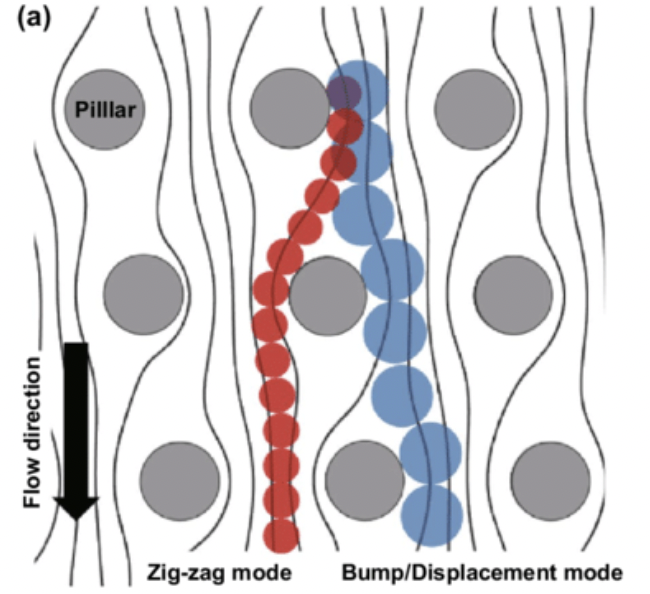
Figure 1: The figure above illustrates the basic principle of the DLD array.
The DLD approach offers several advantages:
- It is a passive microfluidic system, requiring no external forces such as electric fields, magnetic fields, or acoustic waves, making it simple to operate without additional equipment.
- It provides high sorting resolution, with studies demonstrating sub-micron precision.
- It enables continuous sorting, ensuring a relatively high throughput.
- Its design and fabrication are relatively straightforward and do not require highly complex processes.
During my PhD, I successfully fabricated DLD arrays capable of sorting 1 µm and 3 µm particles, and I validated their performance using microbeads. These results demonstrate that DLD is a reliable sorting technique. However, bead-based validation has its limitations, as beads are spherical, whereas real microorganisms can exhibit a variety of shapes, such as rod-like or elliptical forms.
DLD arrays also have certain drawbacks. For instance, they are prone to clogging. When processing large sample volumes or samples containing larger particles, direct introduction into the DLD array can lead to clogging. Once clogging occurs, the device may no longer be usable.
Due to the fact that related work has not yet been published, I have not presented all the results of my PhD research here. Once the associated publications are released, I will share my full findings, including aspects related to biological analysis.